Acupuncture for Back Pain in Issaquah
What is Back Pain?
Back pain is one of the most common reasons people seek treatment, ranging from acute muscle strain to chronic issues involving the spine, discs, or surrounding nerves. Patients often describe tightness, stiffness, sharp pain with movement, or a persistent dull ache that limits daily activity.
How Acupuncture Helps Back Pain
Acupuncture helps reduce inflammation, improve circulation, and relax tight or overactive muscles. It also supports the nervous system by modulating pain signals and promoting the body’s natural healing response.
_________________________________________________________________________________________________________
Backed by science
A systematic review and meta-analysis (February 2026) compared acupuncture with usual care—including physical therapy, medications, and exercise—for chronic low back pain.
It found that acupuncture was associated with greater reductions in both pain and disability at immediate and intermediate follow-up. These benefits were consistent across studies, with particularly strong effects observed in trials using electroacupuncture.
A different major randomized clinical trial published in JAMA Network Open studied 800 adults with chronic low back pain—and the results were clear:
- Significant improvements in pain-related disability
- Benefits lasted 6 to 12 months after treatment
Patients receiving acupuncture outperformed those receiving standard medical care alone
- Treatment was safe, with minimal side effects
Even better—over a standard course of just 8–15 sessions, patients experienced meaningful, lasting relief.
_________________________________________________________________________________________________________
What to Expect During Treatment
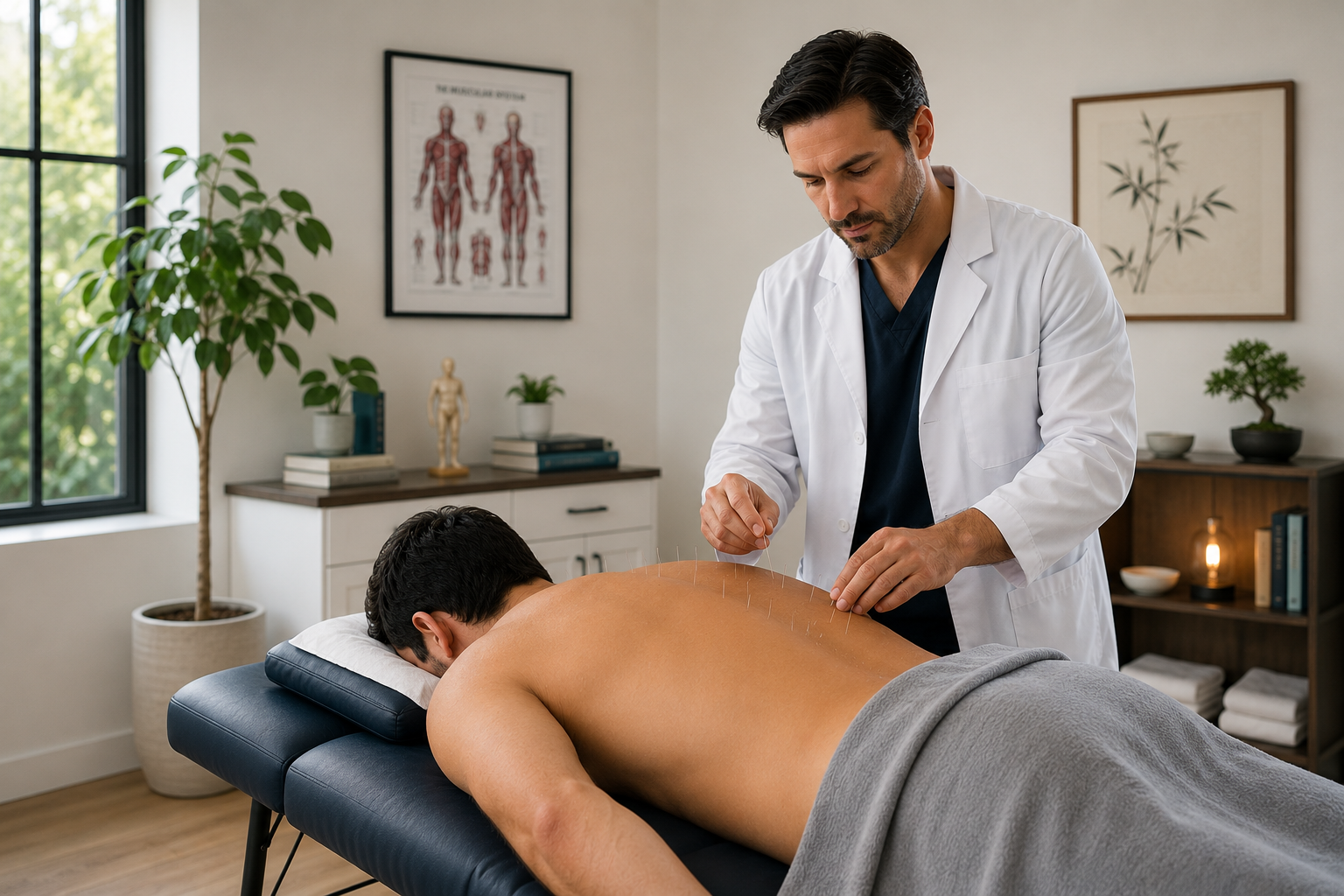
Fine, sterile needles are placed in targeted areas to reduce tension and restore function. Most patients feel minimal discomfort, often followed by a sense of relief or deep relaxation.
Most patients experience little to no discomfort with acupuncture. If you’re sensitive to needles, we can use fewer and even finer ones—or choose effective needle-free techniques.
In Traditional Chinese Medicine, we’re trained to treat a wide range of conditions. In Issaquah, I commonly work with low back, neck, shoulder, hip, knee, elbow, hand, and foot pain. I’ve also helped athletes—from treating shoulder issues in softball players to relieving back pain & turf toe in lacrosse players—so they can return to peak performance.
_________________________________________________________________________________________________________
Where will the needles be placed?
You may hear me say I’m using both local and distal points. Here’s what that means:
I treat pain from both the branch (symptoms) and the root (underlying cause).
Local points are placed near the area of pain to release tight muscles, trigger points, and fascial restrictions.
Distal points are points away from the pain and work along fascial pathways (similar to meridians) to support longer-lasting relief and improve overall function.
These approaches combined help treatments work faster and more effectively.
_________________________________________________________________________________________________________
Traditional and modern approaches
I don’t prefer a single technique—I tailor each treatment to meet you where you are to achieve the best results.
Most sessions may include a combination of acupuncture, electrical stimulation, laser, cupping, Gua Sha, and Tui Na (massage). However, every treatment is adapted to the individual. For example, when working with stroke or cancer patients, I adjust both point selection and stimulation methods—using needles, laser, or acupressure depending on what’s most appropriate and comfortable.
In terms of needle style, I use Traditional Chinese Medicine and Traditional Korean medicine approaches. These approaches have moderate needle manipulation that can easily be adjusted to the patient.
_________________________________________________________________________________________________________
How Many Sessions Are Needed?
Acute cases may respond within a few treatments, while chronic conditions typically require a series of visits. Many patients begin to notice changes within the first 2–4 sessions.
For acute pain, more frequent treatments over a shorter period are recommended. For example, if you injured your knee yesterday, coming twice per week for 3–4 weeks can help reduce pain and inflammation quickly.
For chronic pain, treatments are typically less frequent but may require more sessions overall. For instance, chronic low back pain often responds well to 8–12 treatments at once per week. In these cases patients start to feel noticeable change between 4-6 treatments. Finishing the complete series of 8 to 12 sessions will better lock in the pain relief for a longer period.
A 2026 clinical analysis found that acupuncture works best as a series of treatments—not just a few visits. Patients who received a full course of care experienced significantly greater improvements in pain and function.
8 to 12 or more treatments → Strong, lasting improvement
Fewer than 8 treatments → Reduced effectiveness and less consistent results
Most patients in the study reached better outcomes once they hit the 8+ session threshold.
What this means for you:
Acupuncture builds over time. Sticking with a complete treatment plan helps you get faster relief and longer-lasting results.
_________________________________________________________________________________________________________
Why Choose Us for Acupuncture in Issaquah
Our treatments are tailored to each individual, with a focus on reducing pain and restoring healthy movement. We prioritize listening closely to our patients and working alongside you as part of your wellness team. I am committed to creating a safe, comfortable space where you can fully relax and heal.
The Garage Massage and Acupuncture Therapy offers a high-end, spa-like experience with the comfort of home. It’s clean, warm, and inviting, featuring state-of-the-art treatment tables, heating pads, and heat lamps to support your relaxation and recovery. Our building is accessible and offers step-free entry via elevator.
Our acupuncturists are trained at Bastyr University, certified by the National Certification Board for Acupuncture & Herbal Medicine, and the Washington Department of Health. Bastyr is one of the leading programs in the Pacific Northwest, known for integrating modern biomedical science with Traditional Chinese Medicine.