Acupuncture for Sciatic Pain & Piriformis Syndrome
What is Sciatica?
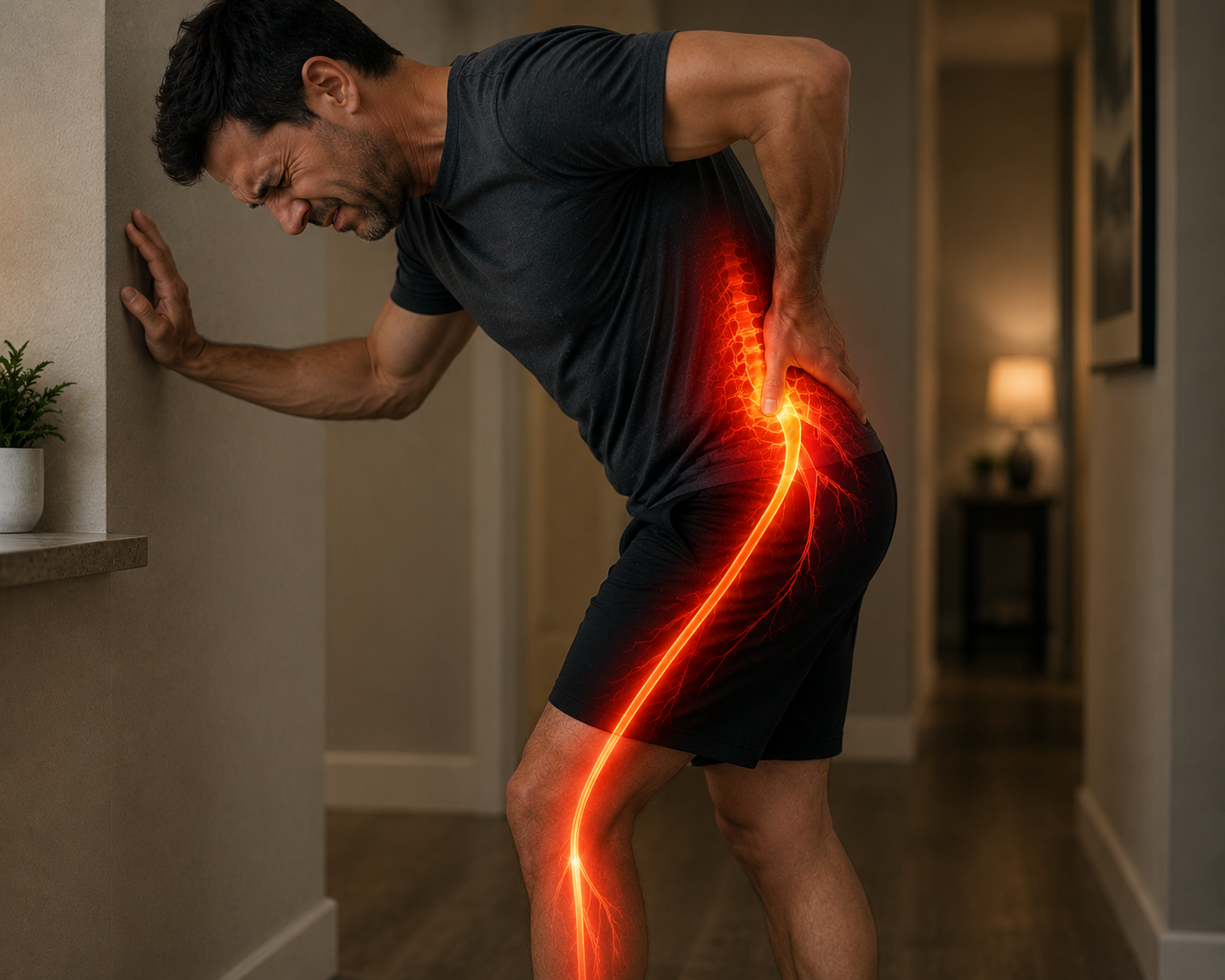
Sciatica is pain that radiates from the lower back down the leg that is caused by compression of the sciatic nerve. This compression can occur for several reasons, with the most common being a lumbar disc herniation. Other possible causes include spinal stenosis, degenerative disc disease, spondylolisthesis, and tightness in the piriformis muscle (piriformis syndrome).
________________________________________________________________________________________________________
How Acupuncture Helps Sciatica
Acupuncture reduces inflammation, relaxes muscles, and improves nerve function. It provides a research-supported approach to relieving sciatica by addressing the underlying causes of pain. Studies show it can decrease inflammation around the nerve, modulate pain signaling, and release muscle tension that contributes to compression. It also enhances circulation and supports the body’s natural healing processes, helping the nerve recover more efficiently. By targeting both the muscular and nervous system components, acupuncture can reduce pain, improve mobility, and offer a safe, non-invasive path to lasting relief.
_________________________________________________________________________________________________________
Evidence based medicine
A 2024 randomized clinical trial found that acupuncture provided significantly greater pain relief and improved physical function in patients with chronic sciatica caused by a herniated disc.
Patients receiving acupuncture experienced less leg pain and better mobility compared to placebo treatment, with benefits lasting well beyond the treatment period.
Acupuncture works by reducing inflammation, calming irritated nerves, and releasing muscle tension—addressing the root causes of sciatic pain. If you’re looking for a non-invasive, research-supported option, acupuncture offers a proven path toward lasting relief and improved movement.
A 2025 meta-analysis reviewing multiple clinical trials found that acupuncture significantly improves treatment outcomes for sciatica, including meaningful reductions in pain intensity and improved overall function.
Across the data, acupuncture increased overall treatment effectiveness by 23% (RR = 1.23) and significantly raised pain tolerance while reducing nerve-related pain.
Acupuncture works by decreasing inflammation, calming irritated nerves, and releasing muscle tension—addressing the underlying causes of sciatic pain. If you’re looking for a non-invasive, research-supported solution, acupuncture offers a safe and effective path to lasting relief and improved mobility.
_________________________________________________________________________________________________________
What to Expect During Treatment
Treatment focuses on relieving pressure along the nerve. I assess the muscles surrounding the lumbar spine and hips to identify areas of imbalance or tension. When treating sciatica, I consistently include both the low back and hips, as they function together as a connected unit in movement and stability.
_________________________________________________________________________________________________________
How many sessions are needed?
Most patients improve over several sessions. When treating sciatica, research suggests that approximately 10 treatments within a 2–3 week period can be effective for achieving lasting results. In my clinical experience, for chronic or long-standing cases, starting with more frequent sessions—around four treatments in the first couple of weeks—then tapering to weekly visits until reaching about 10 total treatments tends to be effective. For acute cases, such as a recent injury, a more concentrated plan of 10 treatments over 4 weeks is often recommended to relieve symptoms more quickly and efficiently.
I typically use acupuncture points along the low back near the spine, the hips, and along the outer leg near the IT band—these are considered local points, meaning they are placed close to the area of pain to directly reduce tension and improve circulation. I also incorporate distal points, which are located farther away from the affected area (often on the hands or feet), to address the root of the condition and help regulate the body while reducing overall inflammation.
_________________________________________________________________________________________________________
Why Choose Us for Acupuncture in Issaquah
We take a targeted approach to relieve pain and restore mobility. My treatments are tailored to each individual, with a focus on reducing sciatic pain and balance the back and hip muscles with acupuncture, cupping, and massage (TuiNa). I prioritize listening closely to patients and want to work with you as part of your wellness team. I am committed to creating a safe, comfortable space where you can fully relax and heal.
The Garage Massage and Acupuncture Therapy offers a refined, spa-like environment paired with the professionalism of a modern medical clinic. The space is clean, warm, and inviting, designed to promote both deep relaxation and clinical excellence. We use state-of-the-art treatment tables, heating pads, and heat lamps to enhance comfort while supporting effective, results-driven care.
Our office is fully accessible, with convenient step-free entry via elevator.
Our acupuncturists are trained at Bastyr University, certified by the National Certification Board for Acupuncture & Herbal Medicine, and the Washington Department of Health. Bastyr is one of the leading programs in the Pacific Northwest, known for integrating modern biomedical science with Traditional Chinese Medicine.